3 April 2026, Bangkok, Thailand—Reducing methane emissions is critical to slowing climate change. This potent greenhouse gas is responsible for around 30% of the rise in global temperatures and has a global warming potential 28 times higher than carbon dioxide (CO₂) over 100 years.
To support this effort, the ASEAN-Korea Cooperation for Methane Mitigation project (AKCMM) in Thailand recently held consultations with Thai stakeholders in Bangkok on 16 - 17 March 2026, gathering insights on how to strengthen the country’s methane emission measurement, reporting, and verification (MRV) systems.
Such improvements are crucial, as they can provide a more accurate and comprehensive understanding of Thailand’s methane emissions, enabling stakeholders to design more targeted mitigation strategies. They would also support the strengthening of Thailand’s target to cut greenhouse gas emissions by 47% from 2019 levels by 2035 under its Nationally Determined Contribution (NDC).
AKCMM is a regional project implemented by the Global Green Growth Institute (GGGI). In Thailand, it partners with the Department of Climate Change and Environment (DCCE).
The project has commissioned a study to systematically analyze gaps in Thailand’s methane emissions data
According to Thailand’s First Biennial Transparency Report, Thailand emitted 89.087 million tonnes of carbon dioxide equivalent in 2022, of which 63.53% came from agriculture, 23.85% from waste, 12.19% from energy, and 0.43% from industrial processes and product use. Methane accounts for about 23% of the country’s total greenhouse gas emissions.
The consultation meetings brought together stakeholders from these sectors, including government agencies and the private sector. During sector-specific focus group discussions, participants reviewed the study’s findings before providing comments and recommendations.
The study identifies gaps and constraints in methane emissions MRV systems and provides recommendations and implementation plans to address them, including priority areas and the support needed from relevant agencies.
As required by the Paris Agreement, Thailand submitted its national inventories of greenhouse gas emissions and removals to the United Nations Framework Convention on Climate Change as part of its first Biennial Transparency Report (BTR1) in 2024.
For reporting greenhouse gas emission inventories, the Intergovernmental Panel on Climate Change recommends a tiered approach that reflects different levels of methodological complexity to ensure accuracy while considering resource availability.
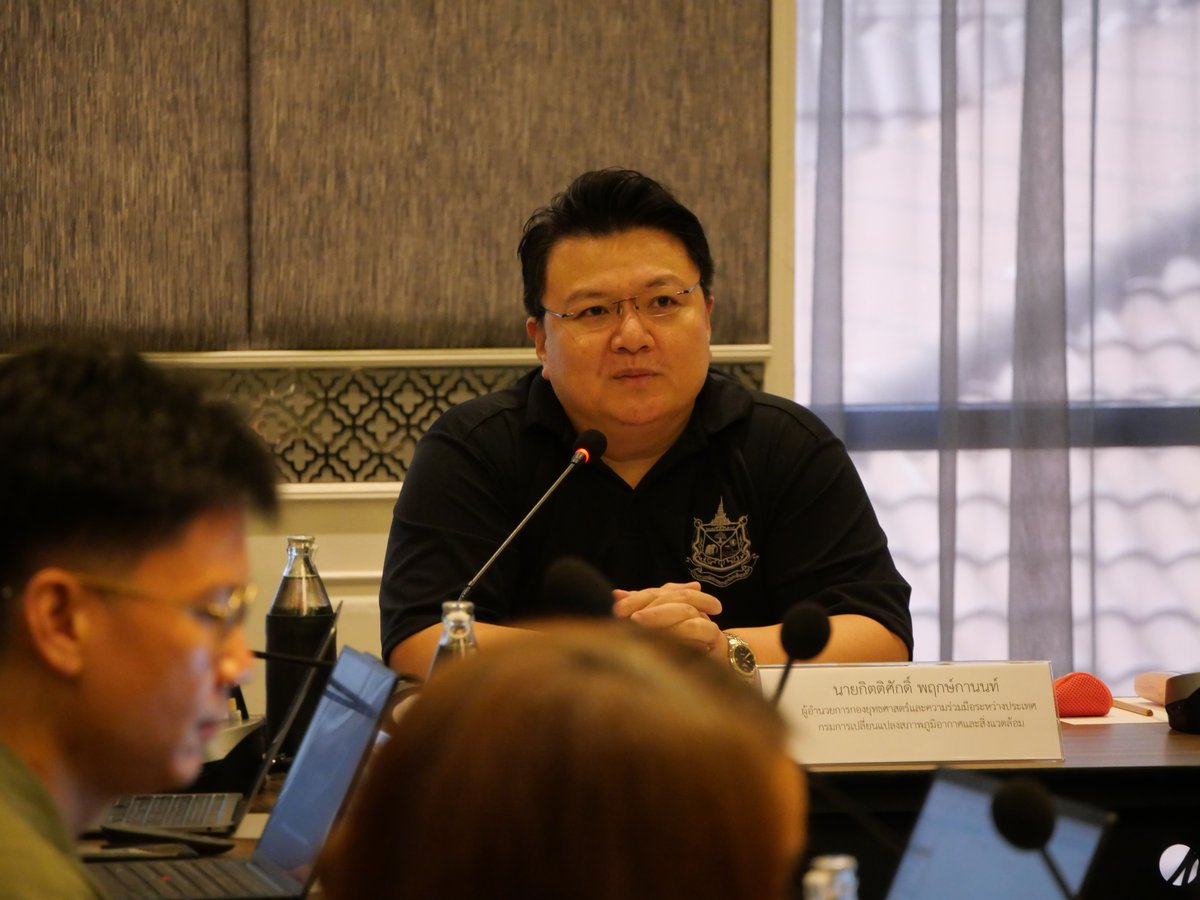
Presiding over the two-day consultation, Kittisak Prukkanone, Director of the Division of Strategy and International Cooperation at the Department of Climate Change and Environment, noted that Thailand has upgraded its greenhouse gas emissions assessment of some key categories from Tier 1—which is based on default global emission factors—to Tier 2, which uses country-specific data.
However, many other key categories remain at Tier 1.
Mr. Kittisak added that this gap analysis indicates that there are structural challenges that affect the transparency and accuracy of information.
“This gap analysis of Thailand’s methane emissions inventory plays a role in supporting greenhouse gas emission data analysis and the development of a methane reduction plan to ensure alignment with Thailand’s Nationally Determined Contribution (NDC),” said Mr. Kittisak.
“The Department will incorporate your insights and recommendations into the final draft of the study to ensure accuracy and completeness,” he added.
“It is imperative for Thailand to upgrade the tiers and integrate methane reduction plans in a practical manner,” Mr. Kittisak said.