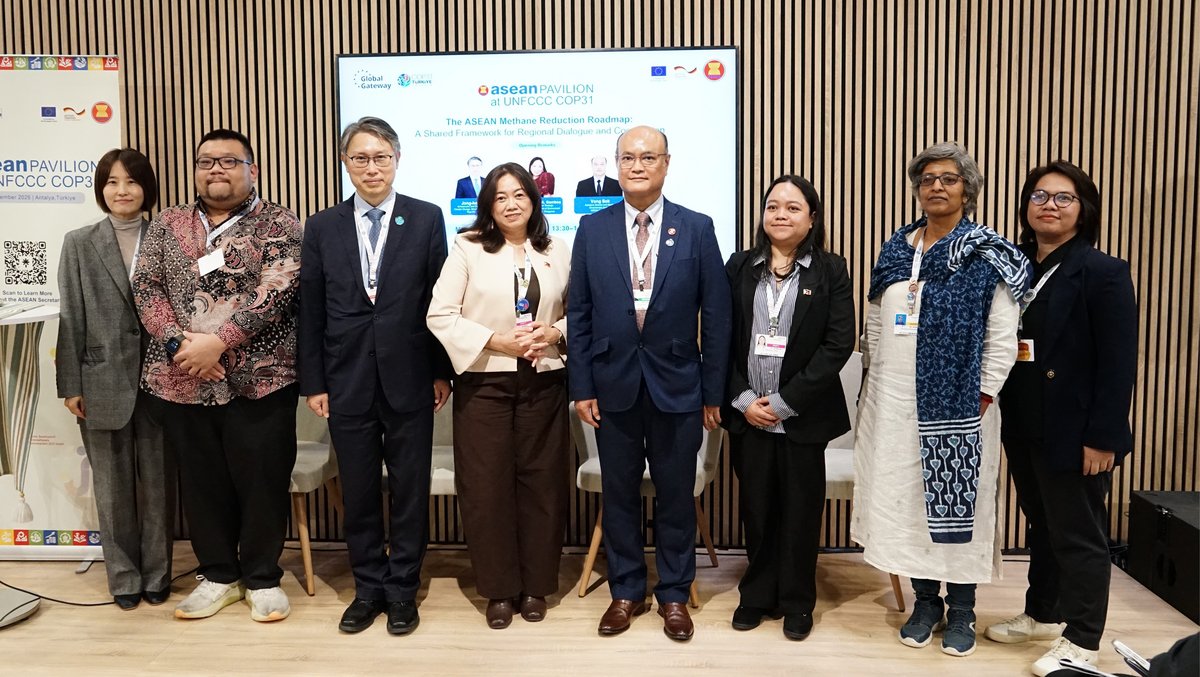
Antalya, Türkiye, 16 November 2026 – The Global Green Growth Institute (GGGI), in collaboration with the Department of Environment and Natural Resources (DENR) of the Philippines, hosted a session on the ASEAN Methane Reduction Roadmap 2026–2030 (MRR) at the ASEAN Pavilion during COP31.
The session was particularly timely as the COP31 Presidency identified Zero Waste and Methane Reduction as one of the key priorities of its Action Agenda, highlighting the growing importance of methane mitigation in global efforts to accelerate near-term climate action.
The event took place at the ASEAN Pavilion, held for the second consecutive year at the UN Climate Change Conference. The Pavilion provides a platform to showcase ASEAN's regional climate priorities and strengthen international partnerships. Presenting the MRR at this platform offered an important opportunity to highlight ASEAN's collective efforts on methane mitigation to the global climate community.
The MRR was developed under the ASEAN-Korea Cooperation for Methane Mitigation (AKCMM) project, supported by the Republic of Korea through the ASEAN-Korea Cooperation Fund (AKCF) and implemented by GGGI in collaboration with ASEAN Member States and the ASEAN Secretariat.
The Roadmap provides a voluntary, non-binding regional framework to support methane mitigation across agriculture, waste and energy. Developed through consultations with ASEAN Member States and relevant stakeholders, it identifies strategic directions for strengthening policies, measurement, reporting and verification (MRV), technology cooperation, financing, capacity development and regional collaboration, while recognising diverse national priorities and circumstances.
The session featured opening remarks by H.E. Jongho Kyun, Ambassador and Deputy Minister for Climate Change, Ministry of Foreign Affairs of the Republic of Korea; Ms. Rochelle Elena A. Gamboa, Assistant Secretary for Strategic Communications, DENR of the Philippines, representing the 2026 ASEAN Chair and event co-organiser; and Dr. Vong Sok, Head of the Environment Division, ASEAN Secretariat.
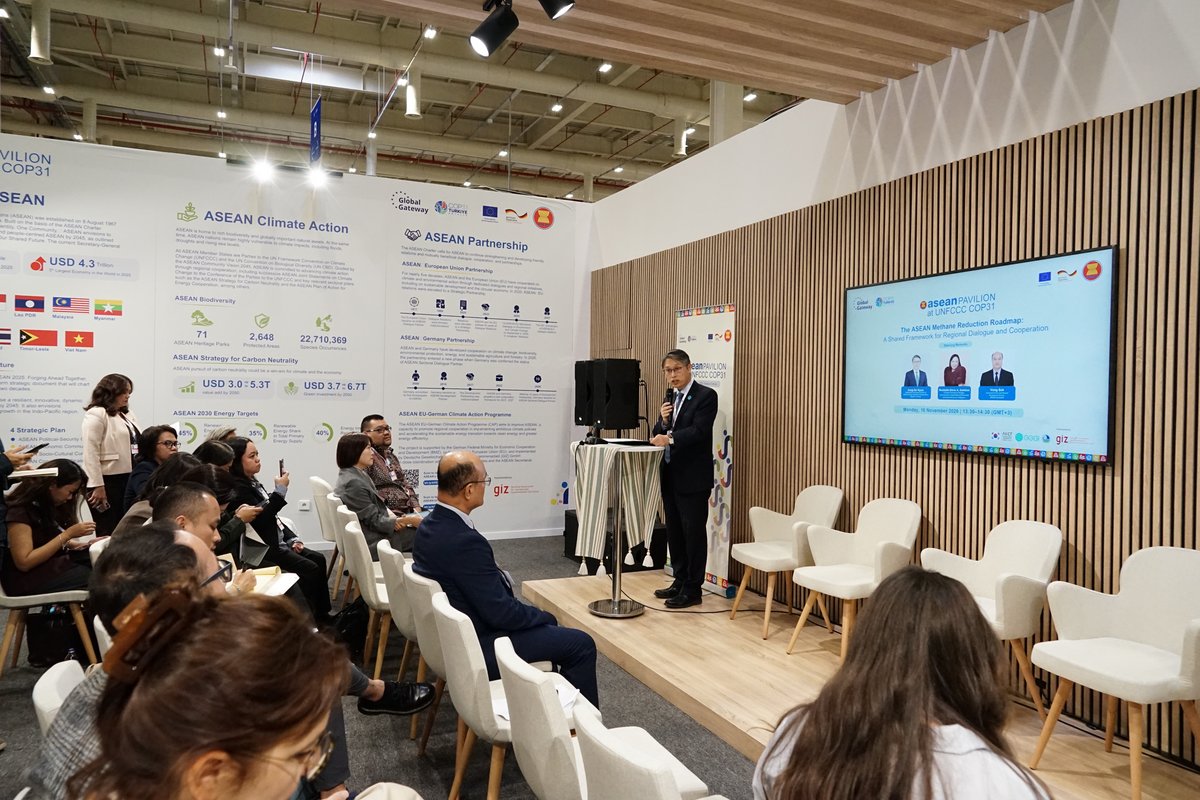
Ambassador Kyun highlighted the importance of continued cooperation between ASEAN and the Republic of Korea on methane mitigation. Assistant Secretary Gamboa emphasised the Roadmap’s voluntary nature and its relevance to diverse national circumstances, while Dr. Sok underscored the importance of cross-sectoral collaboration, capacity building, partnerships, and investment in advancing methane mitigation efforts across the region.
Following a short video and a presentation outlining the Roadmap’s development, six strategic areas and possible approaches to implementation, a panel discussion examined how a regional framework could inform national and local action. A representative of the Philippines’ DENR emphasized the value of an ASEAN-led, non-prescriptive framework for national planning and coordination. GGGI’s Thailand representative discussed gaps in methane data, measurement capacity and interagency coordination, and described ongoing work on national planning and potential mitigation activities. Representatives of Mother Earth Foundation and the Global Alliance for Incinerator Alternatives (GAIA) highlighted waste prevention, source segregation, community participation, recognition of waste workers and locally appropriate solutions.
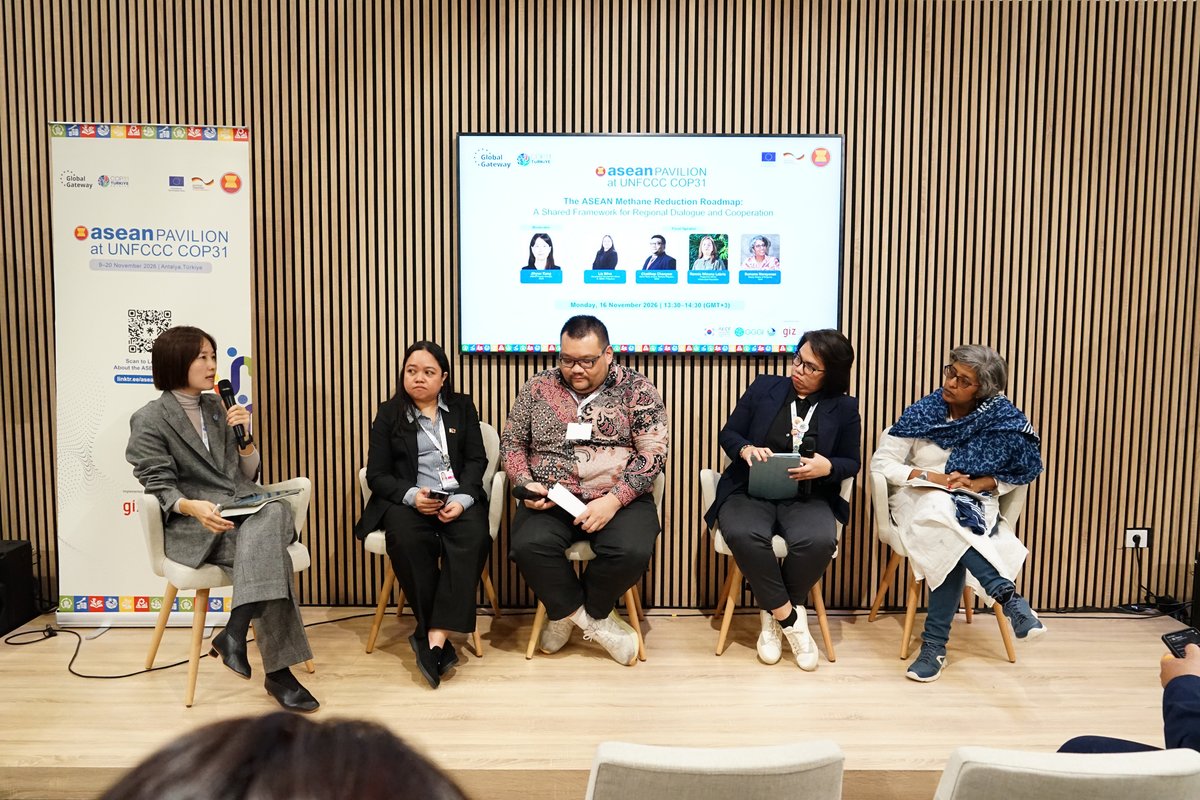
Across the discussion, speakers emphasized that translating regional priorities into practical action would require national ownership, reliable data, technical capacity, access to finance and cooperation among governments, communities, civil society and the private sector. The Roadmap was presented as a shared reference for continued dialogue rather than a source of uniform national obligations or new implementation commitments.
Developed through consultations with ASEAN Member States, relevant ASEAN sectoral bodies and other stakeholders, the Roadmap was endorsed through ASEAN processes in 2026. Through AKCMM, GGGI continues to work with ASEAN partners on methane-related knowledge, capacity development and country-led activities, while further arrangements for the Roadmap’s implementation remain subject to discussion among relevant stakeholders.
About the Global Green Growth Institute (GGGI)
The Global Green Growth Institute (GGGI) was founded as a treaty-based international, inter-governmental organization in 2012 at the United Nations Conference on Sustainable Development. GGGI supports its Member States in transitioning their economies toward a green growth model that simultaneously achieves poverty reduction, social inclusion, environmental sustainability, and economic growth. With 55 Member States and 30 Partner countries and regional integration organizations in the process of accession, GGGI delivers programs and projects in over 57 countries. These initiatives encompass developing innovative green growth solutions, technical support, capacity building, policy planning & implementation, and assistance in building a pipeline of bankable green investment projects, project financing, investments, and knowledge sharing. GGGI’s work contributes to its Member States’ efforts to fulfill the Sustainable Development Goals and the Nationally Determined Contributions to the Paris Agreement.
Follow us on X | Facebook | LinkedIn | YouTube | Instagram | GGGI Asia LinkedIn
For more information, visit: https://gggi.org
(GGGI Asia Regional Office)
Ames Marukatat
Senior Communications & Knowledge Sharing Assistant, Asia Regional Office
Ames.marukatat@gggi.org